damilola.tech

Board member (Vice President & Treasurer), designer and engineer

A Lo Cubano Boulder Fest

Make a ticket purchase hold together from payment confirmation to admission at the door.

I designed, built, and operated the website, checkout, ticket delivery, and organizer tools.

A Lo Cubano / The live experience
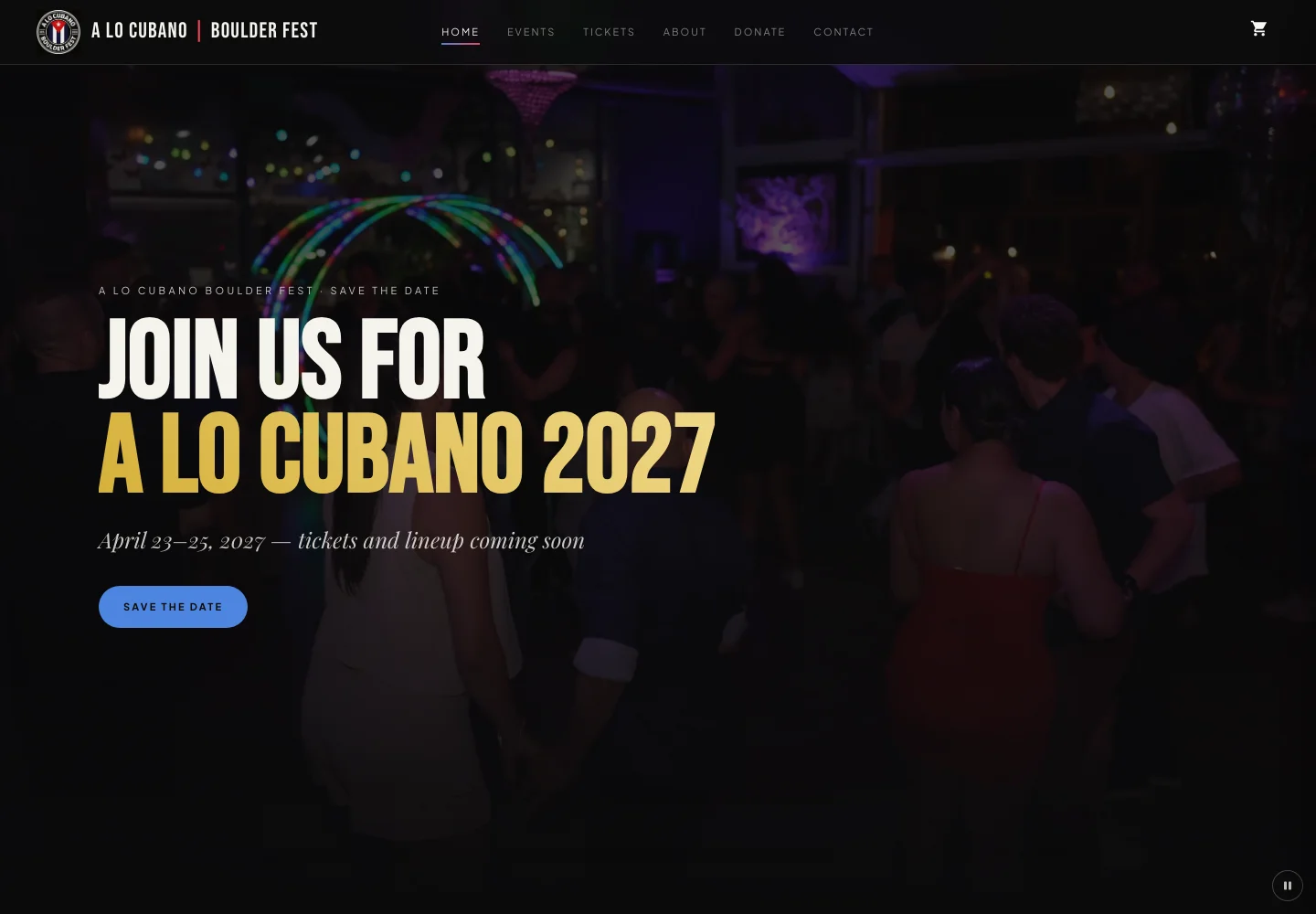
A Lo Cubano Boulder Fest website with its festival artwork and event information
Payments → tickets → check-inActual website

What it delivers

  • Online ticket sales, wallet passes, and door check-in built for the May 2026 festival.
  • Payment confirmation paths converge on one order; ticket validation is committed as one database transaction.
  • Organizers can handle transfers, refunds, and manual entry from the same system.

Key decisions

Two confirmation paths, one idempotent order

A buyer can return from checkout before the payment webhook arrives, or the webhook can arrive first. Both paths call the same order-creation logic, and a unique constraint on the Stripe session id elects exactly one creator. PayPal uses a claimed fulfilment record.

Door scans are transactional

Validating a ticket writes to the ticket, scan log and QR validation records inside one database transaction, so a crash between writes cannot leave a ticket half-spent.

Tradeoffs

Serverless and a hosted libSQL database over servers I operate

It removes server upkeep for a one-person project, at the cost of tighter limits on what the remote database accepts and on function runtime.

Heavy test and CI investment for a seasonal product

The system is only truly exercised a few days a year, so the checks are the safety net. That is slower to build and maintain than shipping without them.

System design

Attendees buy tickets on the festival site. Checkout goes to Stripe or PayPal. For Stripe, the browser success redirect and the webhook both create the order through one idempotent path. For PayPal, the capture call and the webhook claim one fulfilment record. Orders live in the Turso database. Tickets carry QR codes and Apple and Google wallet passes, and Brevo sends email. At the door, a scan validates the ticket inside a database transaction. Organizers use an admin dashboard.

Download the Excalidraw source (open it at excalidraw.com)

Built with Node.js 22, Vercel, Turso (libSQL), React 19, Vite, Stripe, PayPal, Brevo, Apple and Google Wallet, Sentry, Vitest, Playwright.

Show implementation notesHide implementation notes

A Lo Cubano Boulder Fest is a Cuban salsa festival in Boulder, Colorado. I built the festival website and the system behind it: online ticket sales, Stripe and PayPal checkout, QR-code tickets with Apple and Google wallet passes, door check-in, ticket transfer, email, and an admin dashboard for the organizers.

The system runs on Vercel with a Turso (libSQL) database. The 2026 edition ran May 15 to 17, 2026.

Events and ticket types live in a versioned config file that the build loads into the database, and the build also applies the SQL migrations. A cart holds inventory while the buyer pays, through Stripe Checkout or a PayPal order, and checkout validates promo codes. Each ticket gets a TKT-prefixed ID and a signed QR token, and wallet passes come from passkit-generator for Apple Wallet and the Google Wallet REST API.

Brevo sends the order and ticket emails and holds the newsletter lists. Failed sends go to a retry queue that a scheduled job drains, and a Brevo webhook records delivery, bounce and unsubscribe events for newsletter subscribers. At the door, a camera page scans the QR code and the validate endpoint allows one scan per ticket. The admin console signs in with a password and a TOTP code and covers refunds, transfers, manual entry, bulk import and audit logs. Six Vercel Cron jobs handle reservation cleanup, event status, email retry, email delivery monitoring and log retention.